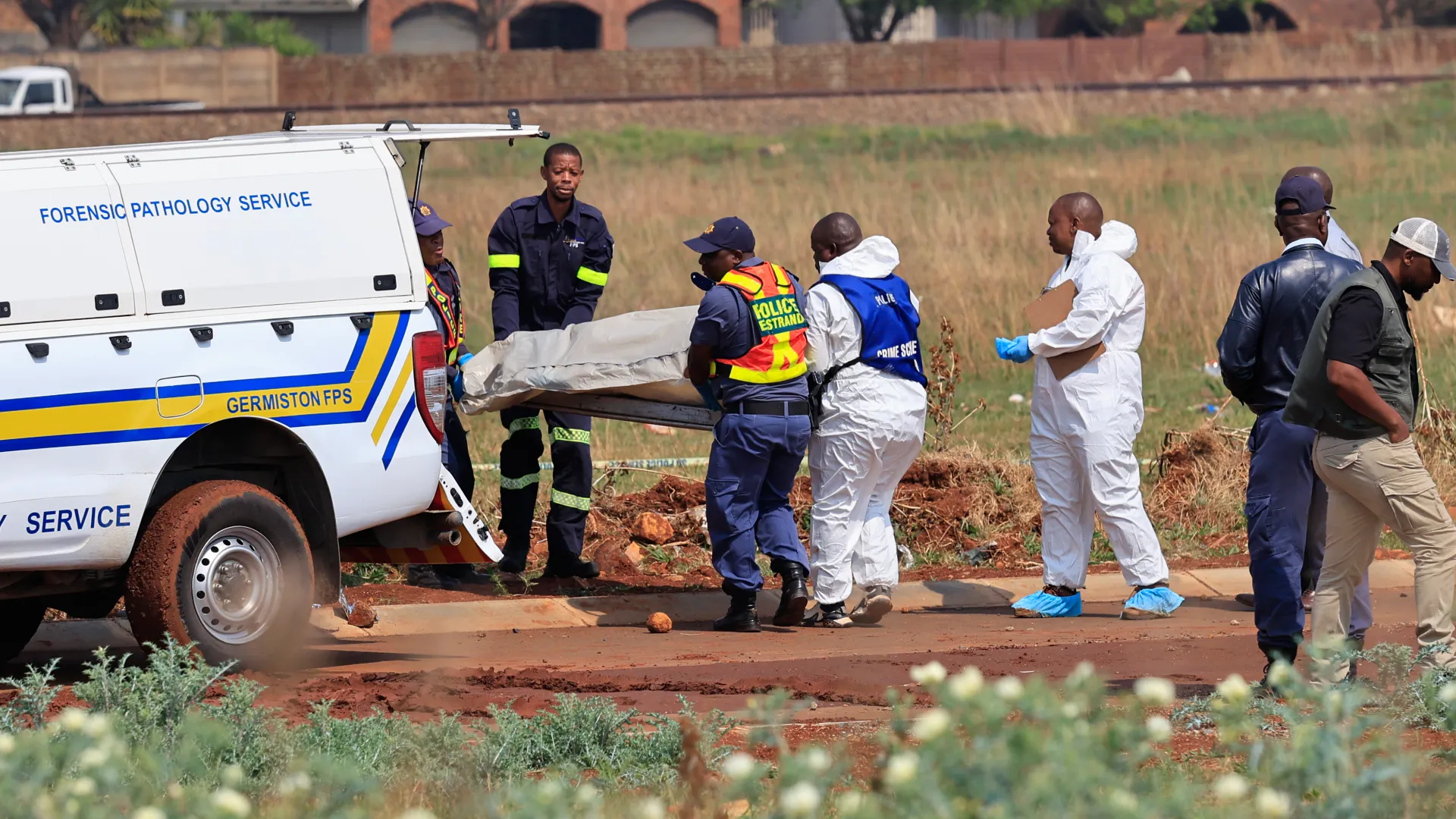
What began in mid-July as an isolated discovery near a Gauteng highway has become one of the most closely watched criminal investigations in South Africa in years. On Thursday, police confirmed that a ninth woman's body had been found in the Ekurhuleni municipality east of Johannesburg, deepening fears that the country is confronting a serial killer, or a coordinated group, preying on women in a relatively small stretch of territory.
All nine bodies have surfaced within the same municipality over roughly two months, most of them in or near Kempton Park before the pattern spread to sites 25 to 35 kilometres away. Police say they are examining similarities across the cases that were, in their own words, concerning enough to justify a public warning — while stressing that investigators have not ruled out the possibility of more than one perpetrator acting independently.
A Timeline of Discovery
The first victim, a 37-year-old woman, was found bound with cable ties near the R21 highway on July 15; a suspect was arrested within two days, though the case's connection to the later killings remains under review. A second victim, 32, was discovered partially clothed on August 24. A third body, badly decomposed, turned up on September 10. From there, discoveries accelerated sharply: five bodies were recovered within a single week in mid-September, including that of a well-known amateur runner whose disappearance had already drawn a public social media search campaign before her body was located. A sixth body was found along a road in KwaThema, Springs, on September 15, followed by further discoveries that brought the total to nine by September 18.
Government and Police Response
President Cyril Ramaphosa has described the killings as a source of "fear and uncertainty" in affected communities, particularly among women, and vowed that no stone would be left unturned in solving them. Acting Police Minister Firoz Cachalia called the pattern of discoveries "deeply disturbing" and announced a multidisciplinary investigation tasked with establishing whether the cases are linked, identifying those responsible, and bringing them to justice. Gauteng police commissioner Fred Kekana said investigators are weighing every possibility, including multiple suspects operating separately rather than a single serial offender.
Authorities have imposed a lockdown around Kempton Park following the most recent discovery and are offering a reward of R400,000 (about $25,000) for information leading to an arrest. Women living near the affected areas have been urged to avoid travelling alone, particularly after dark.
A Country Confronting Femicide
The killings have reopened a painful national conversation about violence against women in South Africa, which has among the highest femicide rates in the world according to United Nations data. Police-recorded crime statistics show 5,427 murders nationwide between April and July alone — an average of roughly 45 a day — while more than 9,700 rapes and over 12,500 sexual offences were reported between January and March. Amnesty International South Africa called the Ekurhuleni discoveries "another horrific reminder" that women in the country remain unsafe, and the Commission for Gender Equality has called for a coordinated safety review involving police, local government, and transport authorities.
What Investigators Are Considering
Forensic and behavioural analysts assisting the inquiry are working to establish whether the killings share a signature — method, victim profile, or disposal pattern — that would point to a single perpetrator, or whether the cluster instead reflects several unrelated crimes converging on one area over a short period. Police have not publicly confirmed a single suspect and have asked residents to report any information, however minor, to the dedicated task team rather than speculate on social media, where unverified claims about the case have already begun to circulate.
For now, the investigation continues alongside a broader public reckoning: a reminder, campaigners say, that the country's gender-based violence crisis remains urgent even when no single case dominates the headlines. Anyone with information is asked to contact the South African Police Service or the national Gender-Based Violence Command Centre on 0800 428 428, which operates free, 24 hours a day.